Flush casement windows in Steyning, for flint and brick cottages
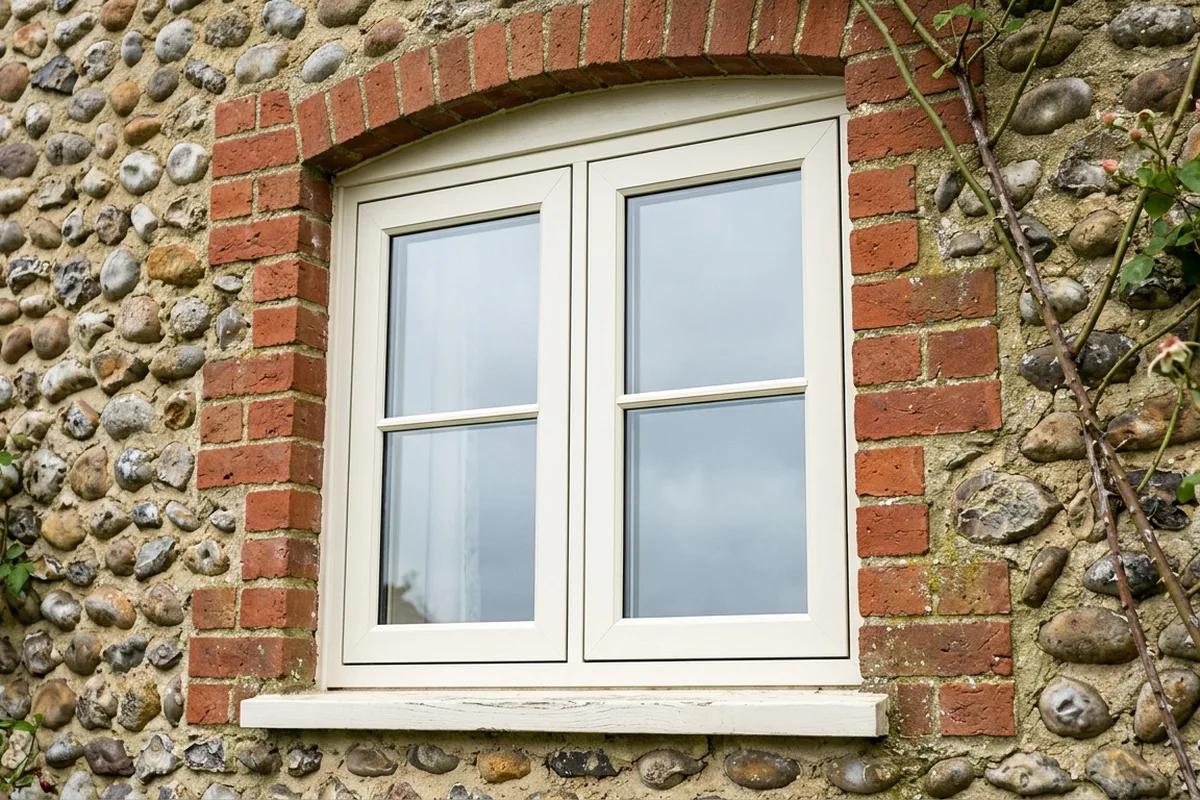
The commonest old window in Steyning is a small side-hung casement. A flush casement is the modern window that looks most like it.
In a flush casement the opening light closes level with the outer frame, the way a joiner-made casement does. A standard uPVC casement sits proud of the frame and has a thicker, stepped look. On a flint cottage with red brick dressings the difference shows straight away, because the window sits in a small opening and there is not much else on the wall to look at.
Why it suits Steyning
Horsham District Council's appraisal of the conservation area describes most of the town's buildings as having casements with small panes, with sashes reserved for the larger houses. It also notes that some uPVC windows have already gone in and that replacements on Charlton Street have worn away the character of that street. A flush casement with external glazing bars, in white or off-white, is the way to replace a cottage window in Steyning without adding to that list.
What to specify
Bars on the outside. Bars stuck to the outside of the glass, ideally with a spacer bar between the panes, read as real glazing bars. Bars only between the panes look flat.
Match the old pattern. Count the panes in the window you are replacing and keep the count. Two lights each divided once is common on the lanes; some older cottages had more.
Keep the opening sizes. Do not let anyone widen or square off a cottage opening to suit a stock frame.
Colour. Off-white or a soft cream sits better against flint than brilliant white.
uPVC, aluminium or timber
uPVC flush is our usual suggestion for a cottage that is not listed. Aluminium flush costs roughly a third to a half more and is slimmer still. Timber flush costs about twice as much as uPVC and wants its first repaint roughly three years in, then on a regular cycle; it is the right answer on a listed house, and the timber page explains when.
Illustrative example of a typical job of this kind
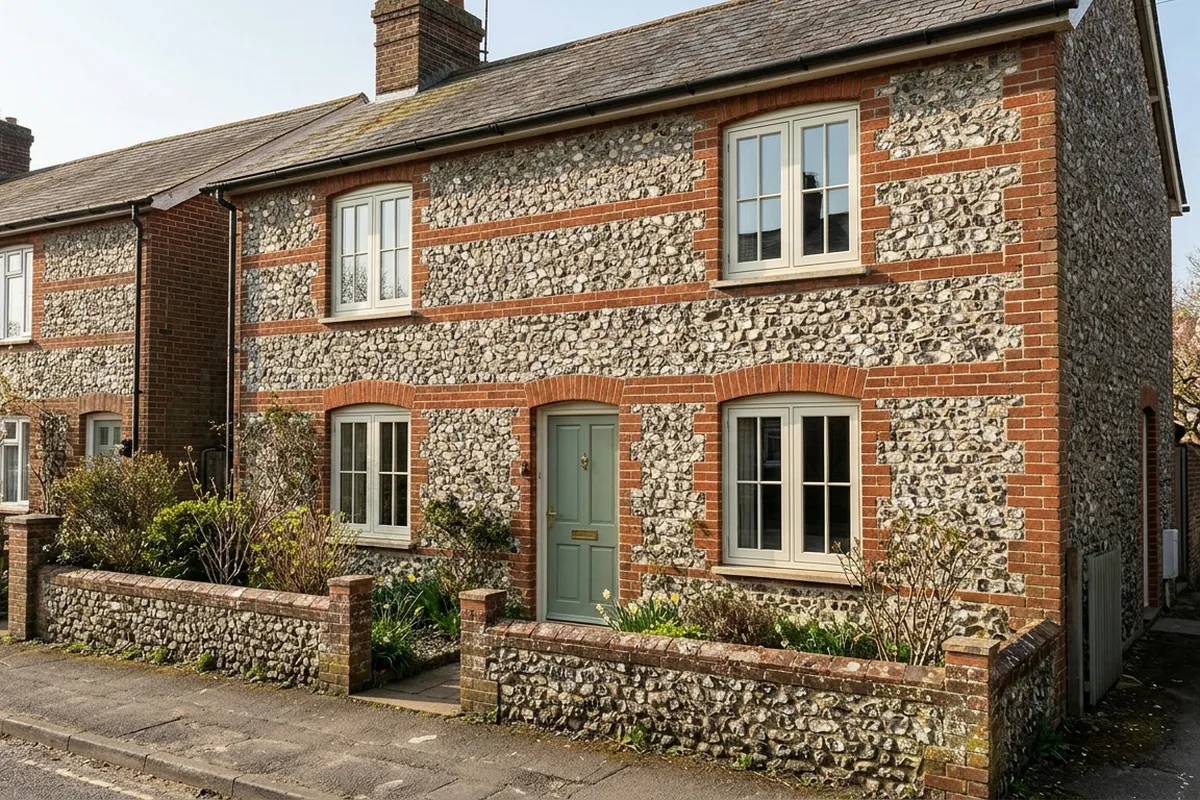
Four uPVC flush casements and a front door on a brick-and-flint cottage
A Victorian brick-and-flint cottage in a short terrace of the sort found on the edge of the old town. Not listed, inside the conservation area, so the new windows must look like what is there now.
Four uPVC flush casements, about 1000 by 1200 mm, two up and two down
Off-white frames, external putty-line bars dividing each opening light in two
A composite front door in a heritage green, with a small glazed top panel
Scaffold for the upstairs windows
Typically £7,100 to £12,300, supplied and fitted, including VAT.
This is the same cottage as the timber casement example further down. Same openings, same bar pattern and the same door: on the windows alone, uPVC costs roughly half.